The harbor remembers.
Fishing labor, shipbuilding and settlement formed a productive edge between city and sea.
ARCHITECTURE · DESIGN RESEARCH · 2026
Fishing, shipbuilding and exchange form the first layer of the project.
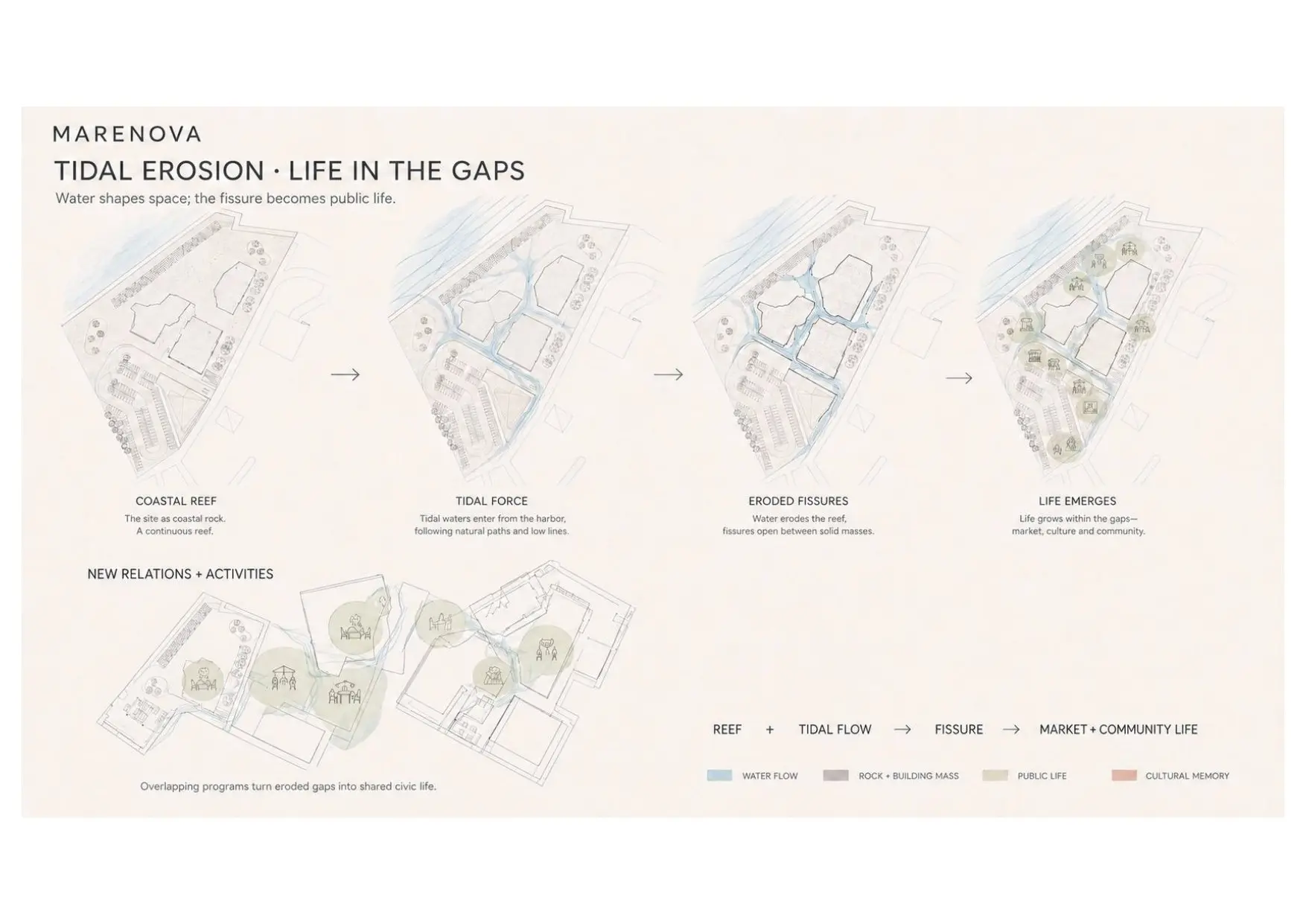
The tide becomes a tool for reading movement, wind and public access.
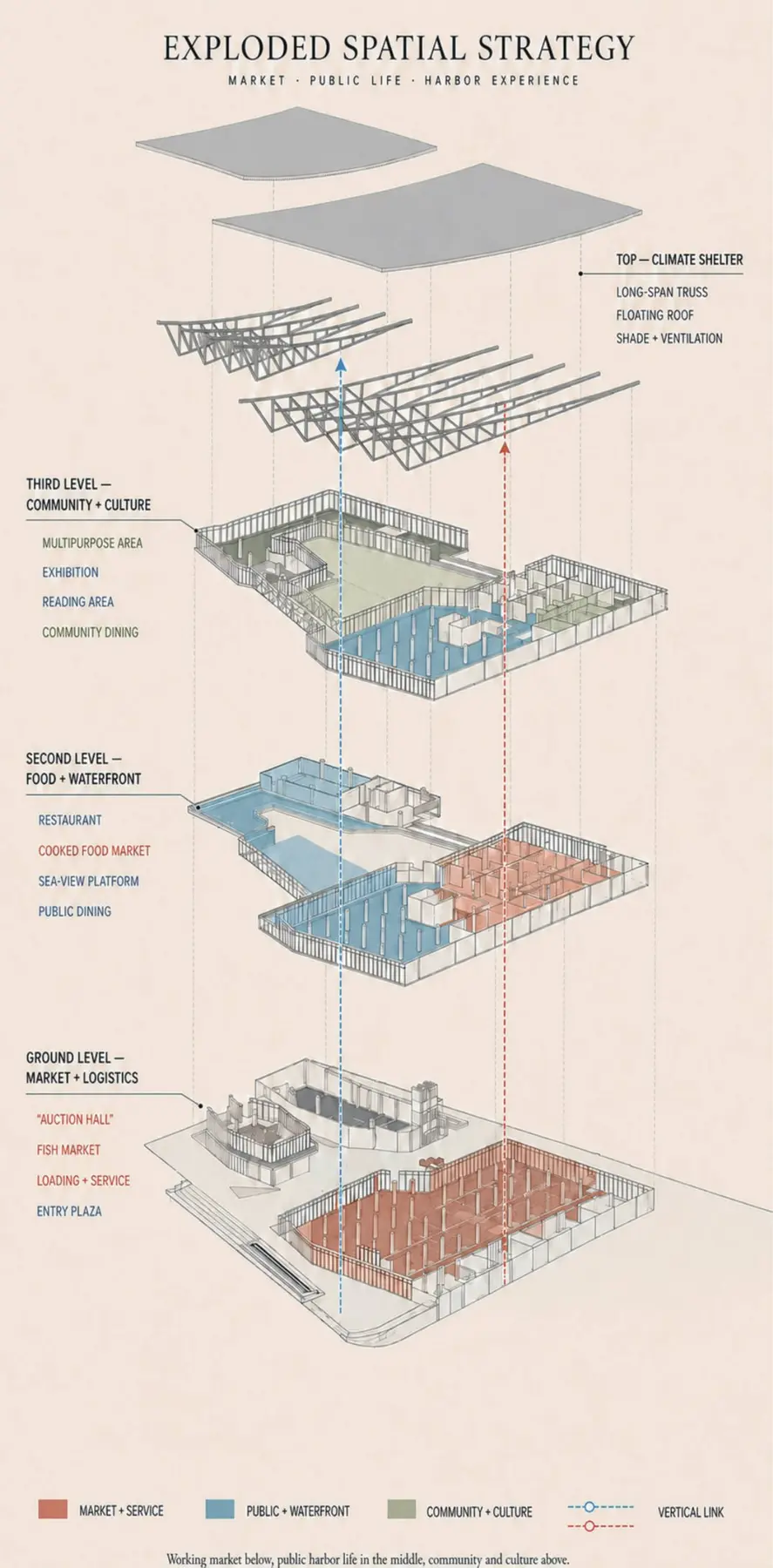
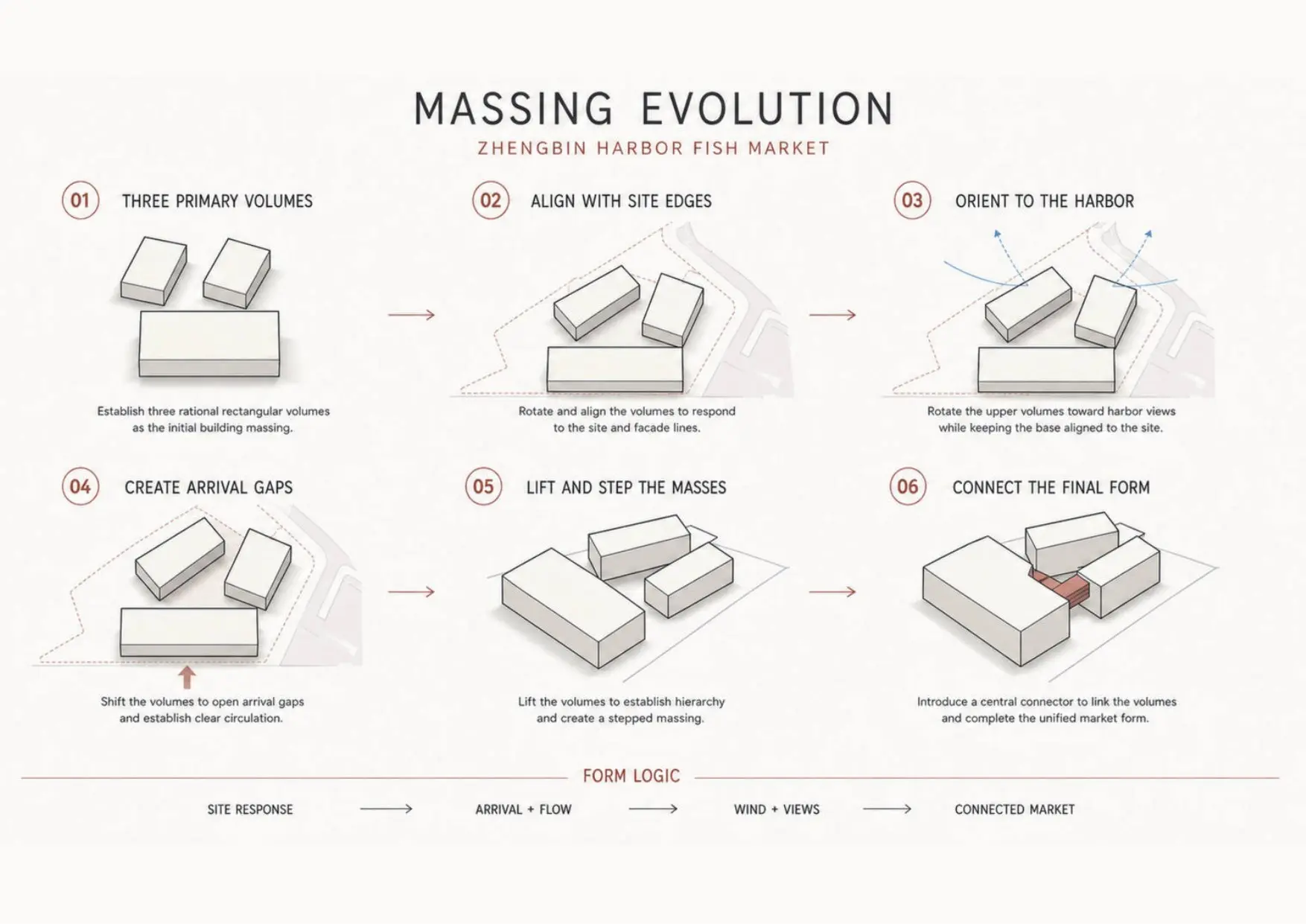
Three volumes remain connected by the civic space carved between them.
Market, culture and waterfront activity occupy the gaps together.
A HARBOR IN TRANSITION
MARENOVA joins mare—sea—with nova—renewal.
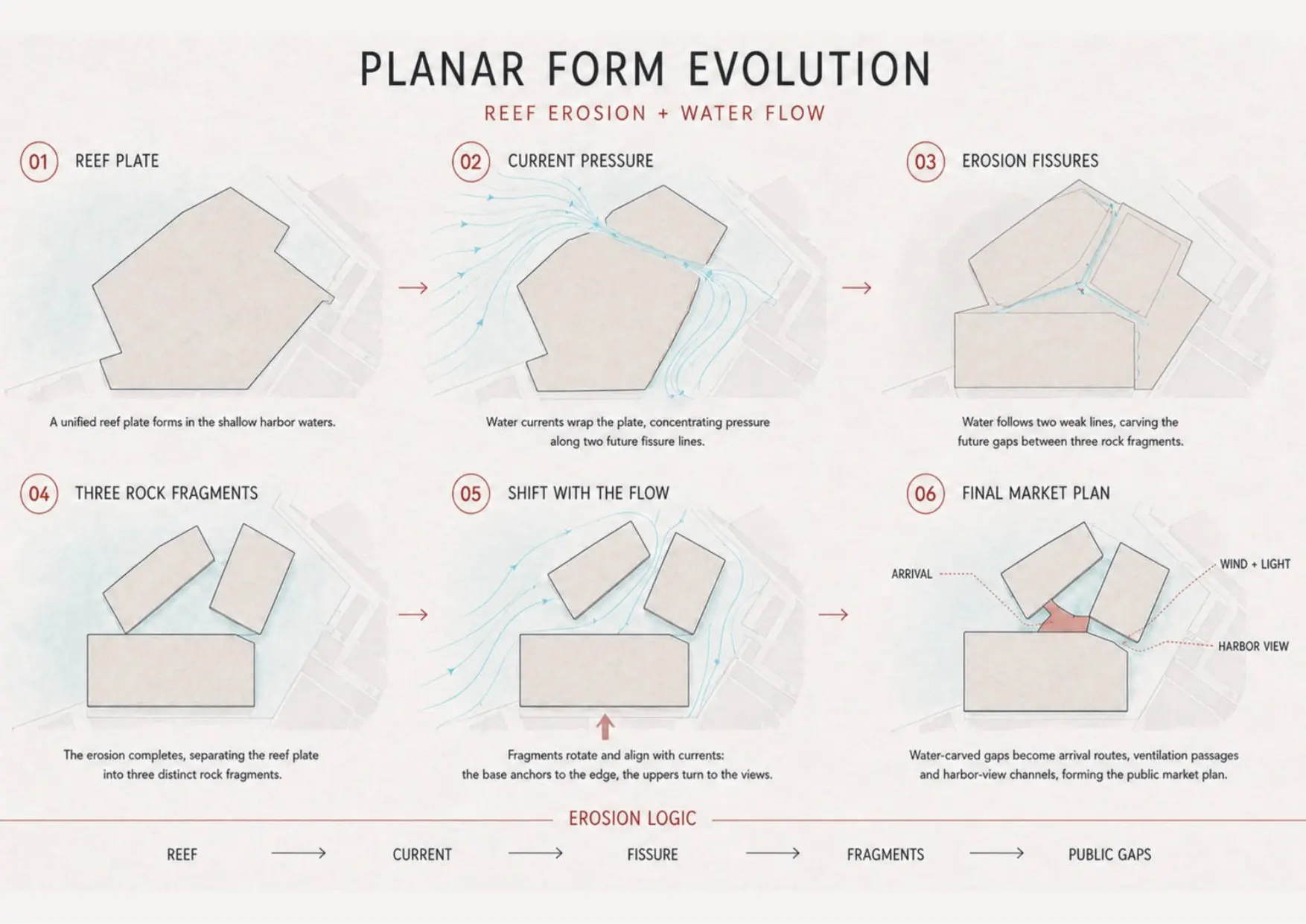
It does not preserve fishing culture as a still image. Like water carving coastal rock, public movement opens a solid plate into three connected volumes. The gaps carry wind, light, harbor views and collective life through the market.
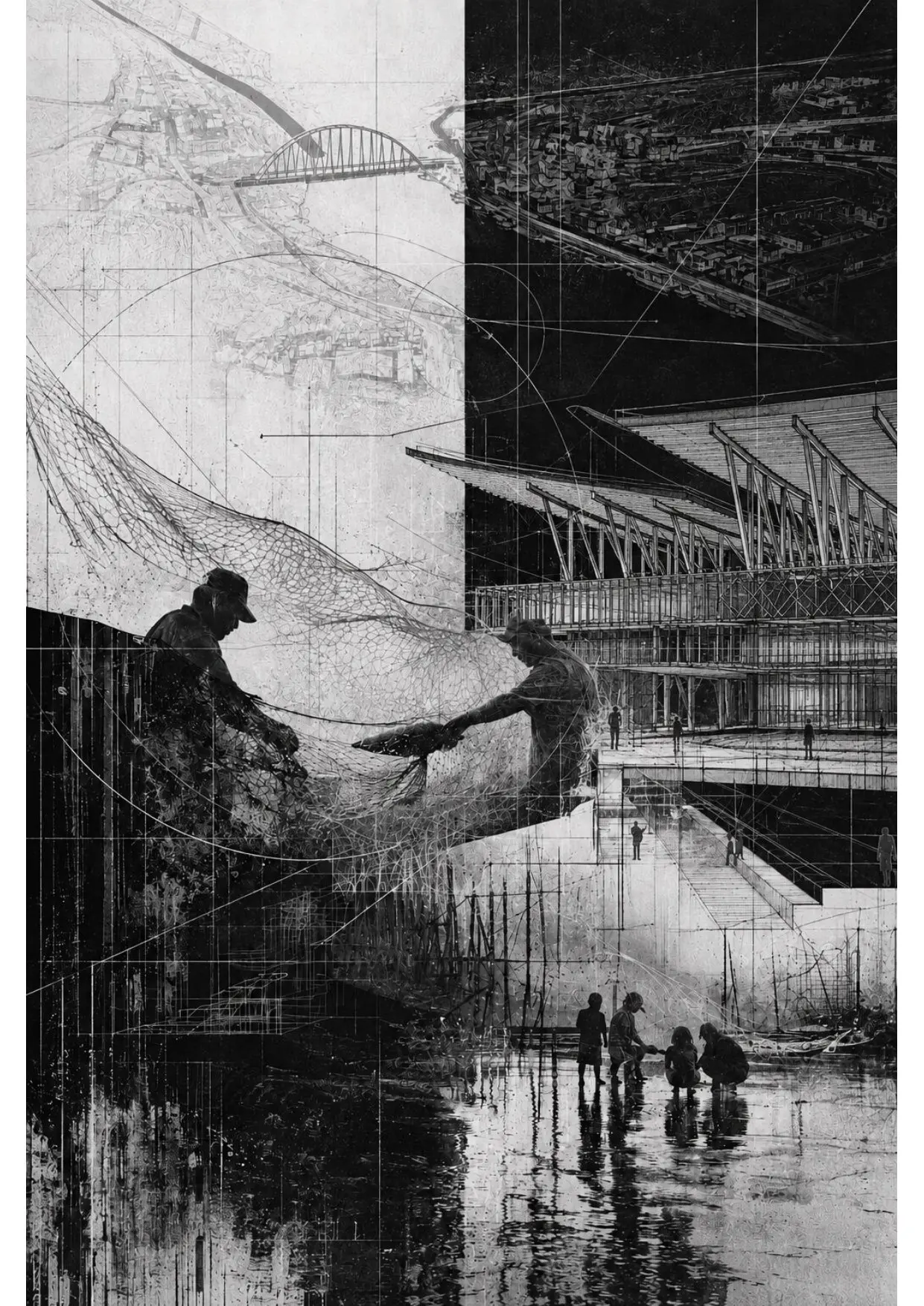
Fishing labor, shipbuilding and settlement formed a productive edge between city and sea.
Currents press into the mass, tracing routes of arrival, ventilation and public movement.
One reef-like field is cut into three readable zones. The space between them becomes architecture.
Market, community and cultural programs remain distinct, yet are bound by continuous circulation.
ARCHITECTURE AS A TIDAL SECTION
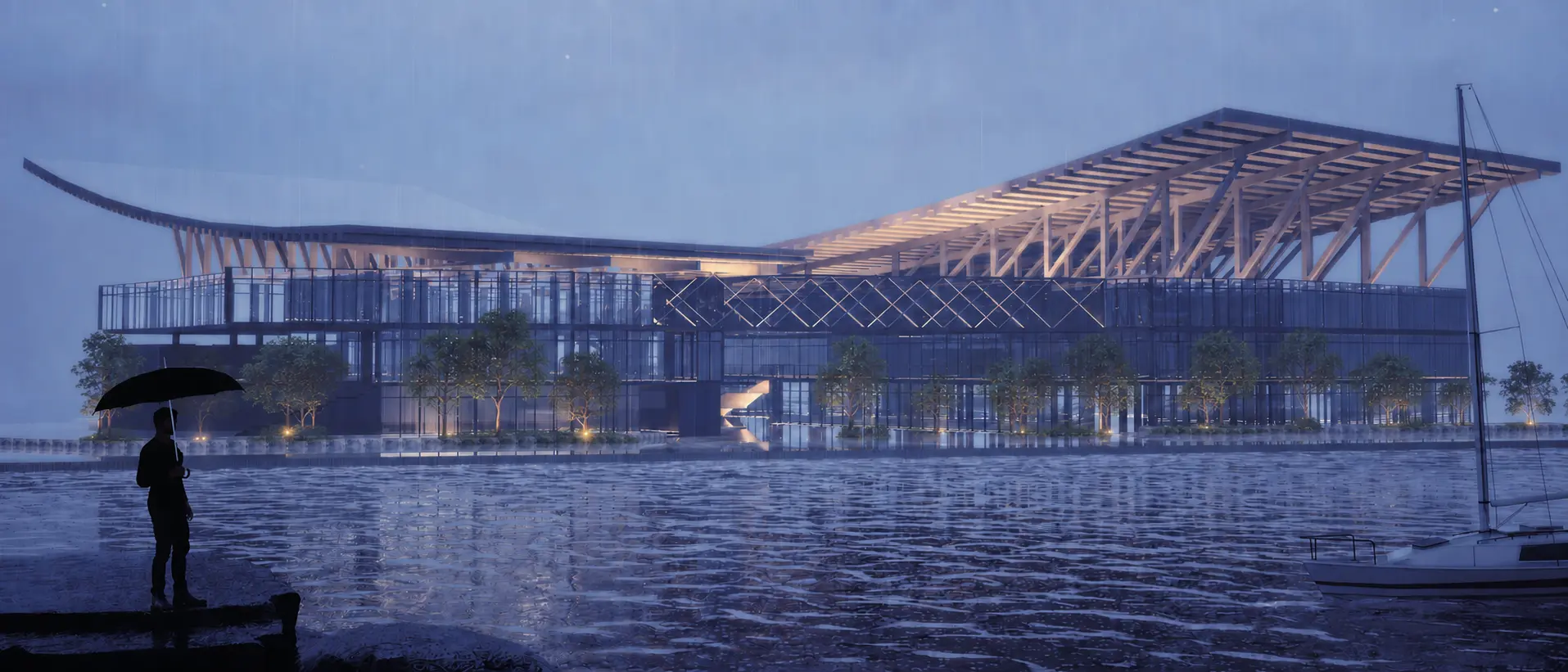
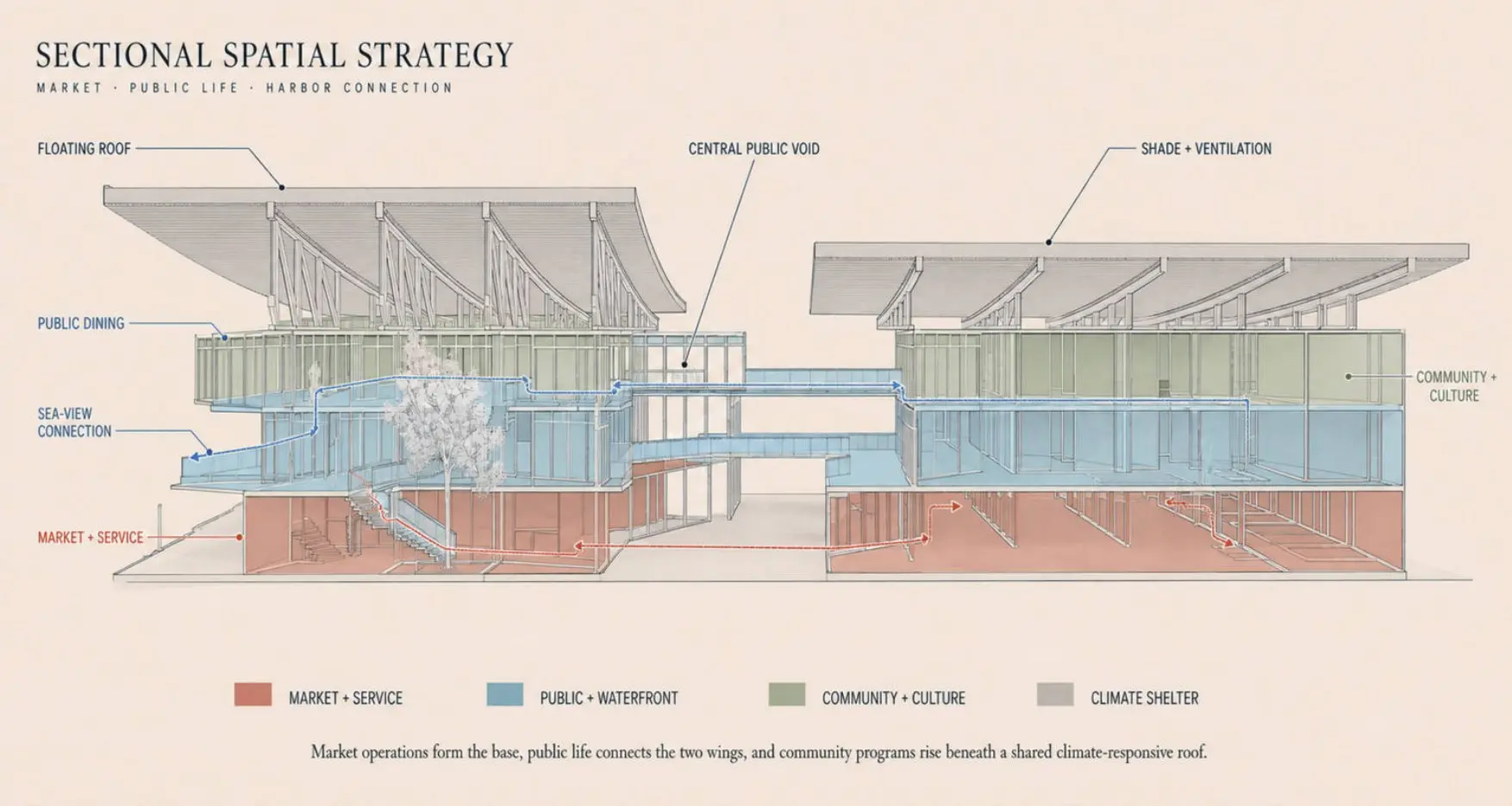
The boat-like profile shelters the market while keeping the waterfront horizon open.
The long-span trusses translate the industrial strength of Zhengbin into a civic framework.
Auction, fresh market, processing and dining form a legible working sequence.
Bridges, terraces and waterfront platforms reconnect daily life with the sea.
THE COMPLETE DESIGN ARGUMENT
MARENOVA is organized as a sequence of causes and responses. Each move begins with an existing harbor condition and turns it into spatial, environmental and civic value.
WORKING MEMORY
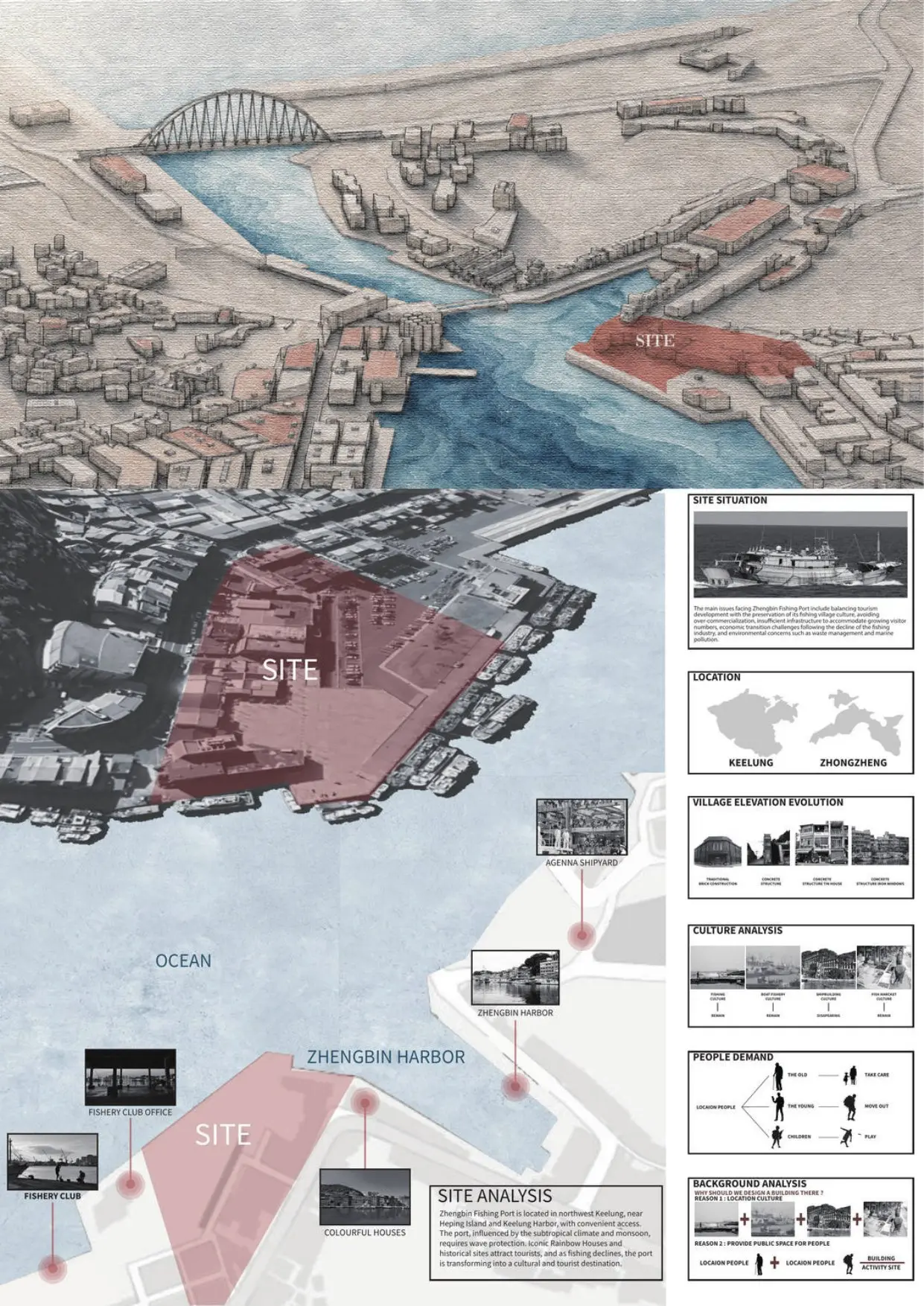
Zhengbin’s identity was shaped by fishing, shipbuilding, family work and exchange at the water’s edge. The project treats these practices as active knowledge—not imagery to be displayed after they disappear.
THE CHALLENGE
As fishing activity declines and younger generations leave, the market risks becoming isolated from both community and waterfront. MARENOVA introduces public life while keeping production visible, so tourism supports rather than replaces the working harbor.
SITE POSITION
The site sits between industrial heritage, fishing settlement, working water and everyday community life. Its role is therefore connective: an urban hinge where arrival, market activity, cultural memory and the harbor meet.
FORM + ENVIRONMENT
A reef-like plate is eroded into three connected volumes. Their gaps admit prevailing harbor wind, daylight and long views to the sea. Rotated and lifted fragments form shaded passages, terraces and public rooms rather than leftover space.
PROGRAM + MOVEMENT
Auction, fresh market, processing, dining, exhibition and gathering are arranged as one legible sequence. A generous civic spine connects levels and volumes, allowing residents and visitors to encounter the making, trading and culture of the harbor.
STRUCTURE + IDENTITY
Long-span trusses create an open working floor while a lifted, boat-like canopy recalls maritime construction without imitation. The exposed frame gives the new public market the clarity and resilience of harbor infrastructure.
WHY MARENOVAMare means sea; nova means renewal. Together they describe a project in which the sea is not scenery but an active force—shaping form, climate, movement and collective life.
A WORKING CIVIC WATERFRONT
By day, the building supports auction, preparation and exchange. Across the same circulation network, dining, exhibitions and waterfront terraces extend its life beyond trading hours. Local residents and visitors share the harbor without separating culture from the work that produced it.
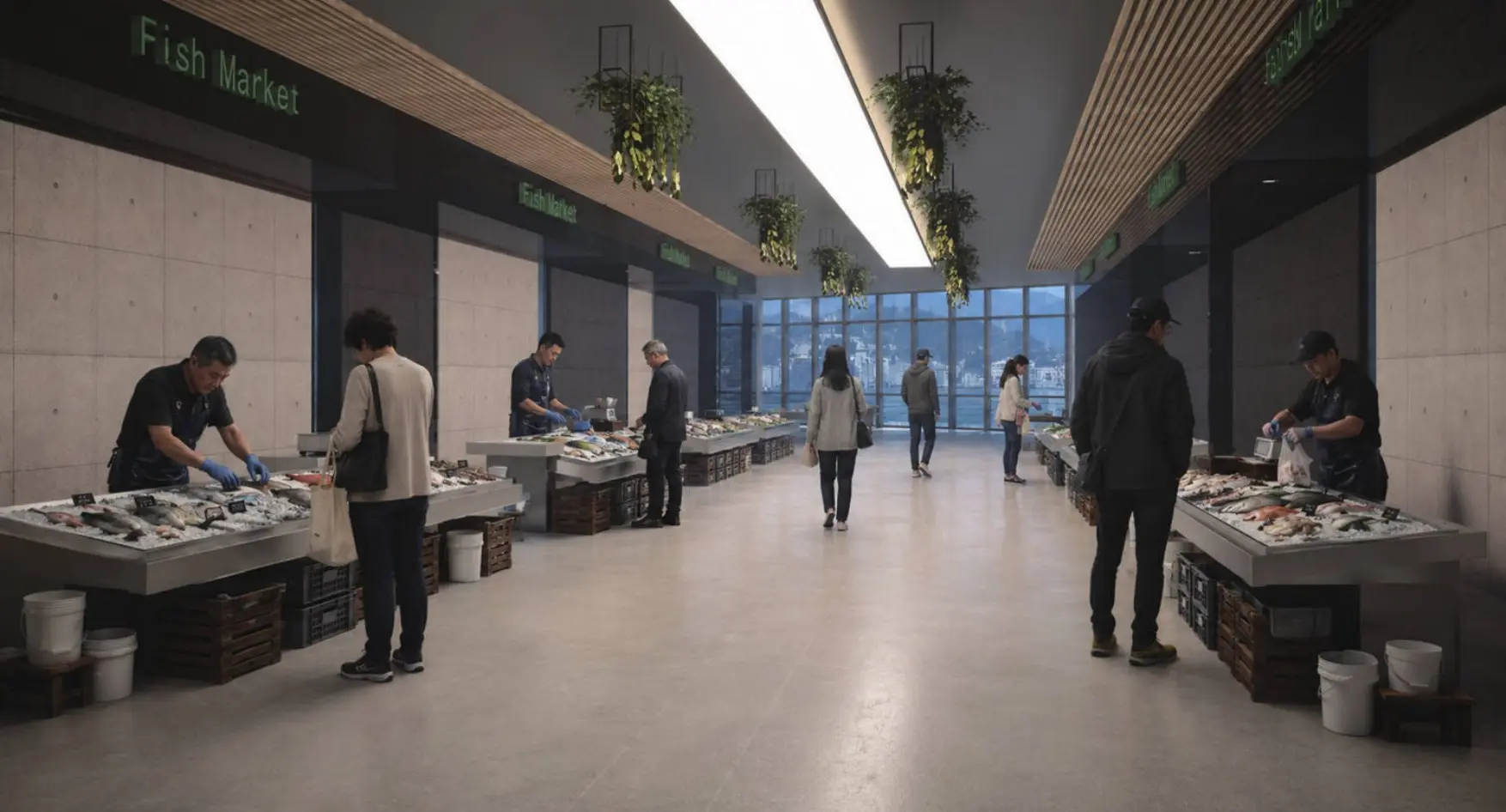
The generous circulation spine lets selling, dining and everyday community life overlap.
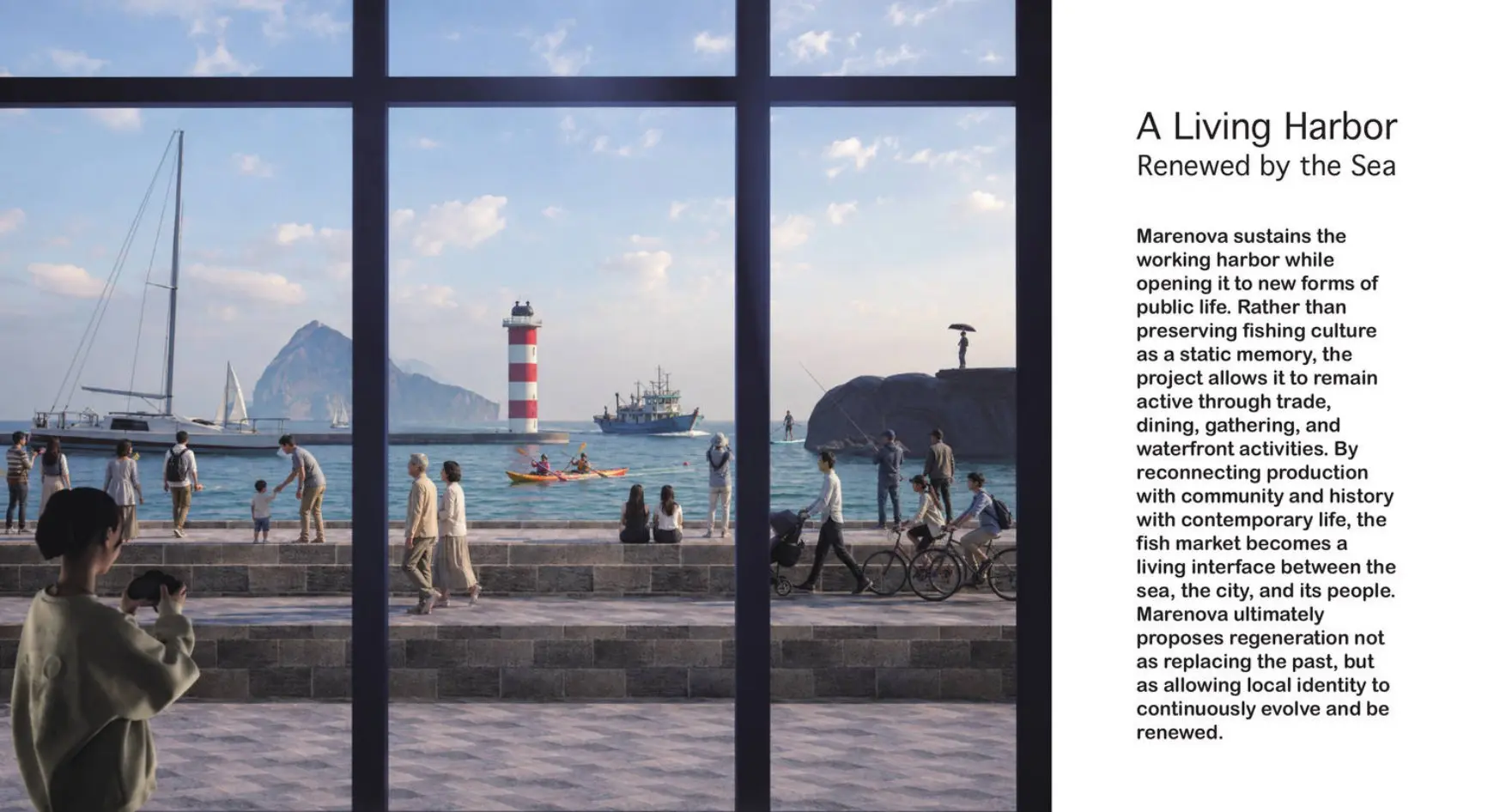
Walking, viewing and harbor activity remain continuously visible from the public edge.
It is where renewal begins.
MARENOVA reconnects production, culture and public life. It preserves the working character of Zhengbin not by freezing the harbor in time, but by giving its knowledge, rituals and spaces new public relevance. Architecture becomes the reef; circulation becomes the tide; and the spaces carved between them become a living civic waterfront.